Kashmiri papier-mâché
Kashmiri papier-mâché is a handicraft of Kashmir that was brought by Muslim saint Mir Sayyid Ali Hamadani from Persia in the 14th century to Kashmir. It is based primarily on paper pulp, and is a richly decorated, colourful artifact; generally in the form of vases, bowls, or cups (with and without metal rims), boxes, trays, bases of lamps, and many other small objects. These are made in homes, and workshops, in Srinagar, and other parts of the Kashmir Valley, and are marketed primarily within India, although there is a significant international market. Wikipedia →
Types & examples

Art Institute of Chicago

Art Institute of Chicago

Art Institute of Chicago
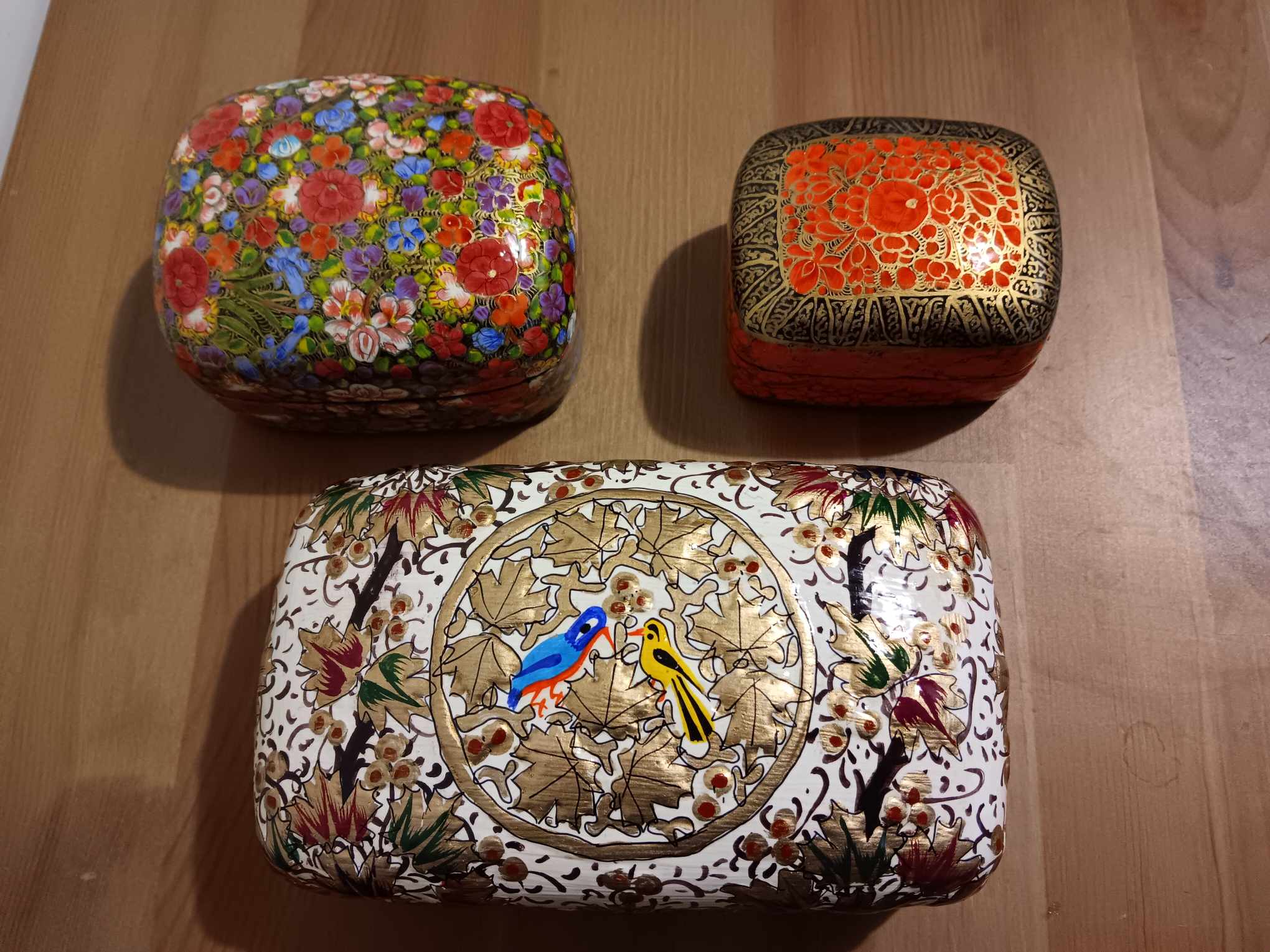
Wikimedia Commons (CC BY-SA 4.0)
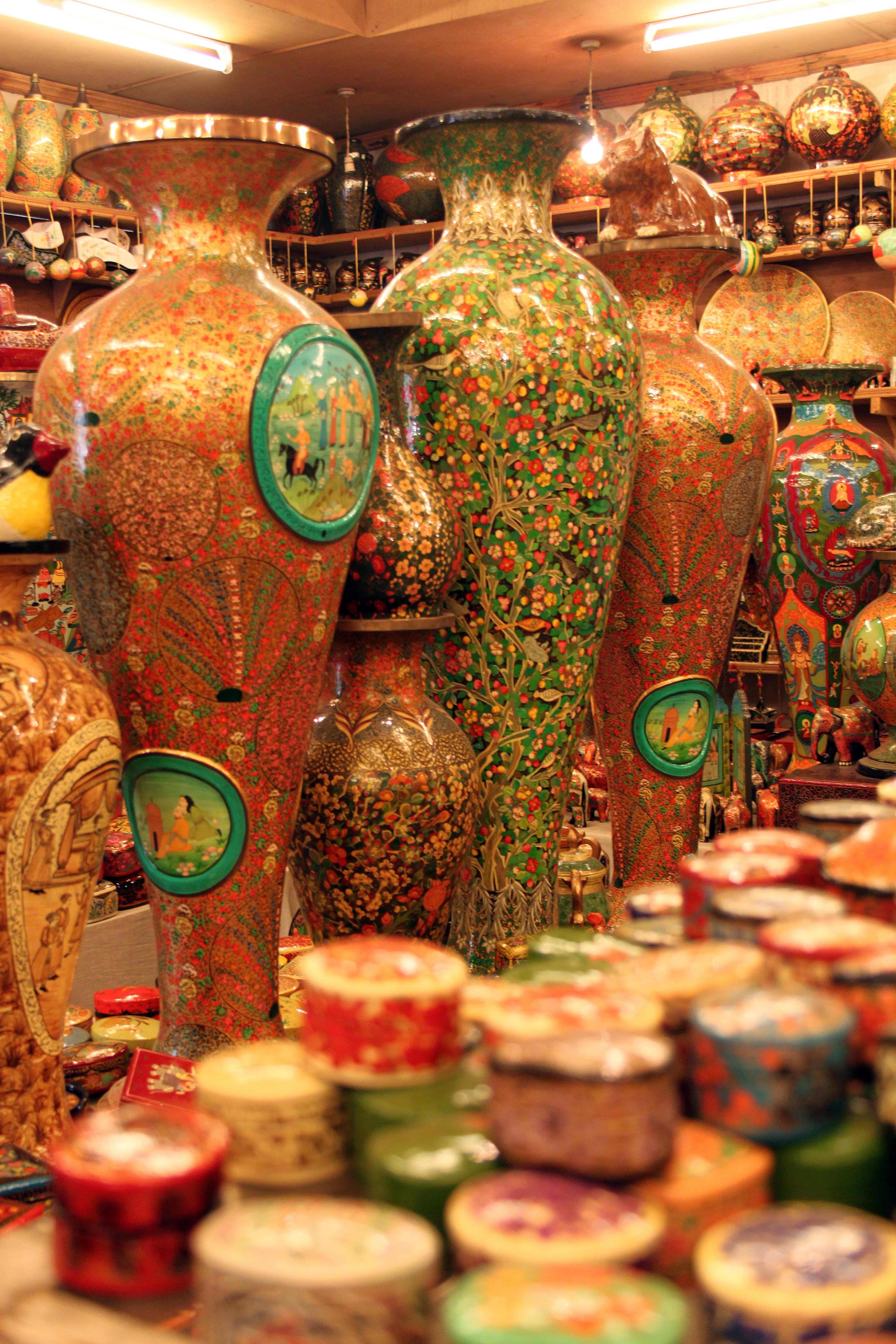
Wikimedia Commons (CC BY 2.0)
Where to buy
Each link opens a live, image-rich search for this craft on that marketplace. Listings rotate constantly; authenticate significant pieces independently — attribution quality varies widely outside museum collections.